
From Sand to Circuits
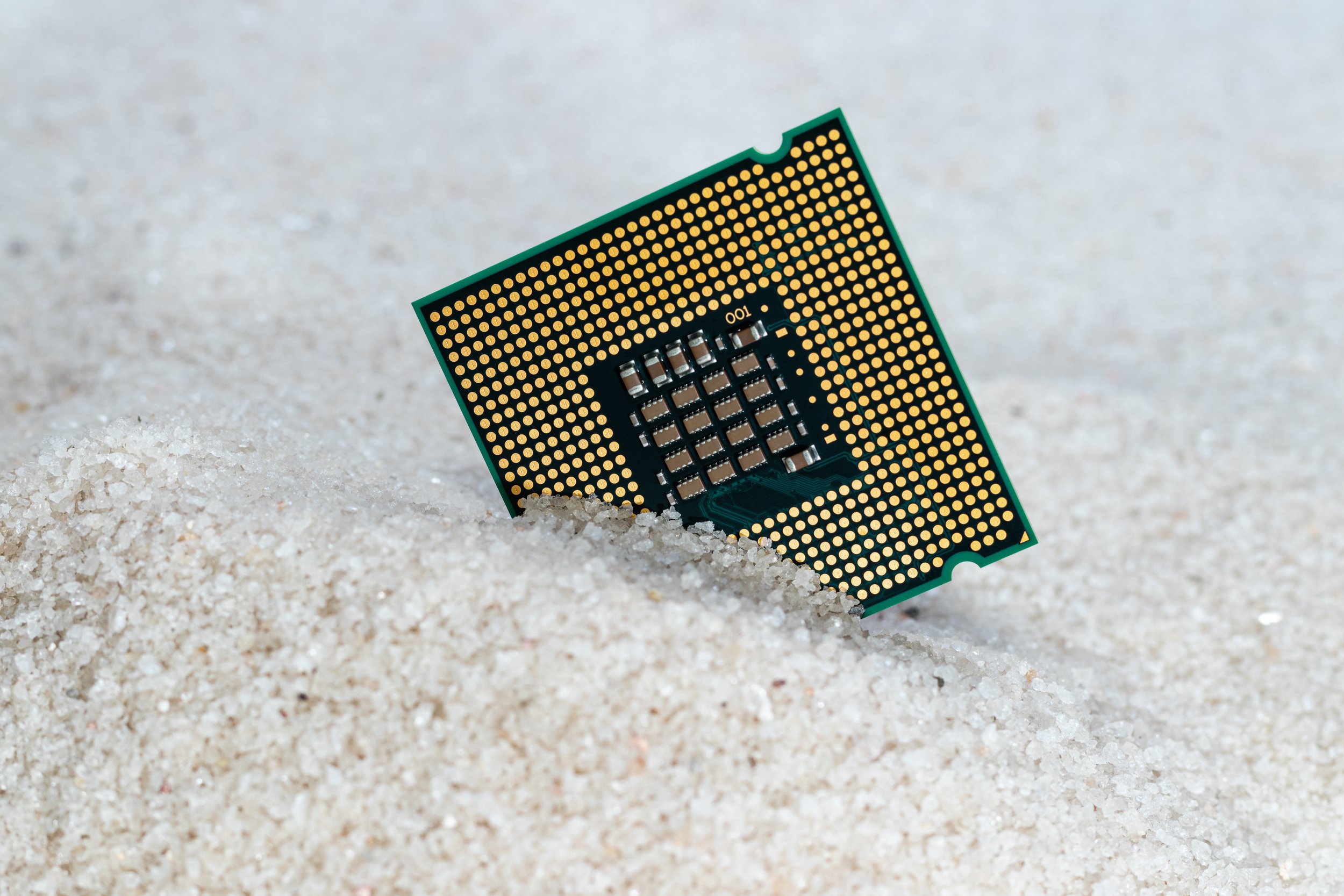
Part 1: Krystal Boule, the project manager of an R&D group at a National Lab, is seeking chemistry consultants to help identify the various jobs and chemical processes involved in manufacturing microchips from raw materials. As chemistry consultants, students then work with Kohl Valant, a materials engineer, to learn about the chemical bonding and crystal growth involved in the formation and doping of a wafer. Students model the formation and cutting of a boule into wafers to make recommendations to their client about the initial phases of the microchip manufacturing process.
Part 2: Students work with Kat A. List, the electrical engineer, and a lab technician as they learn about the chemistry behind photolithography and etching which are used to complete microchip manufacturing process. Students model the industrial process of photolithography using cyanotype printing and conduct experiments to optimize their model. Through hands-on activities, students apply chemistry connections of reaction types, reactivity, and acid-base chemistry to develop a functioning macro-scale chemically printed circuit. The unit culminates in presentations of student work including recommendations to the client for optimizing the microchip manufacturing process using evidence from experiments and chemistry content knowledge.
Core Content: Chemistry
Grade Levels: High School
ME Connection: Fabricating simple circuits use components like LEDs, batteries, and switches. Manufacturing microchips rely on doped silicon materials engineered through processes like photolithography.
Engineering Design Project: Students develop a model/process to represent boule formation and wafer cutting (Part 1). Students fabricate a macro-scale prototype circuit using a photolithography and chemical etching to model microchip manufacturing (Part 2).