

Noyce Microelectronics Master Teacher Fellowship
Program Overview
Funded by the National Science Foundation and supported by SCALE K-12, the Noyce Microelectronics (ME) Master Teacher Fellowship at Purdue University was designed to develop K–12 STEM teacher leaders to meet emerging ME workforce needs.
We partnered with Regional Opportunity Initiatives, Naval Surface Warfare Center – Crane Division, and the Silicon Crossroads Microelectronics Commons Hub to serve four school districts: Washington Community Schools, Lafayette School Corporation, Loogootee Community Schools, and Purdue Polytechnic High Schools.
Eighteen teachers were selected as ME Master Teacher Fellows to lead the integration of ME-focused curricula in high-need schools—sparking student interest in STEM learning and preparing the next generation for careers in the growing ME industry.
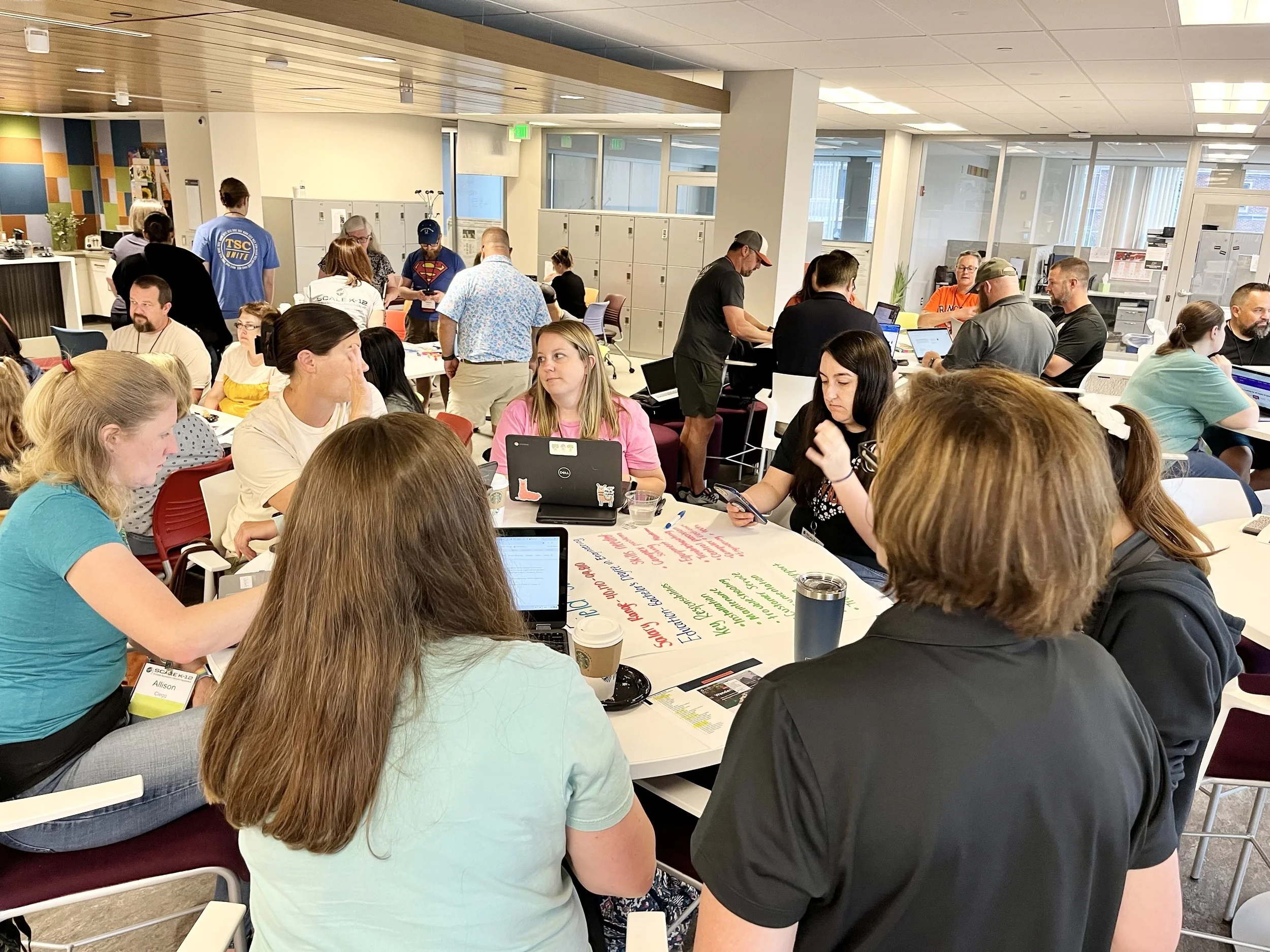
Meet the ME Master Teacher Fellows
Explore profiles of current and incoming Fellows and their school-based projects.

Objectives & Activities:
The Noyce ME Master Teacher Fellowship Programaims to meet the following objectives:
Enhance teachers’ ME content and integrated STEM pedagogical knowledge.
Retain effective elementary and secondary teachers in high-need districts.
Equip teachers with the credentials and experiences to serve as teacher leaders.
Increase student access to, and preparation for, ME careers.
ME Master Teacher Fellows will meet these objectives by engaging in the following activities:
Intensive ME content training
Graduate degree completion, if applicable
District-wide vertical alignment planning
School-based professional development leadership
Industry partnership development
Annual summits and networking
Long-term teacher retention commitments

This material is based upon work supported by the National Science Foundation under Grant No. 1543175 through the STEM + Computing (STEM+C) program from the DRL division. Any opinions, findings, and conclusions or recommendations are those of the investigators and do not necessarily reflect the views of the National Science Foundation. Any opinions, findings and conclusions or recommendations expressed in this material are those of the author(s) and do not necessarily reflect the views of the National Science Foundation or any of our other funders.