
National Science Foundation Awards Purdue $300,000 to Expand AI and Microelectronics Education Through Teacher Fellowship
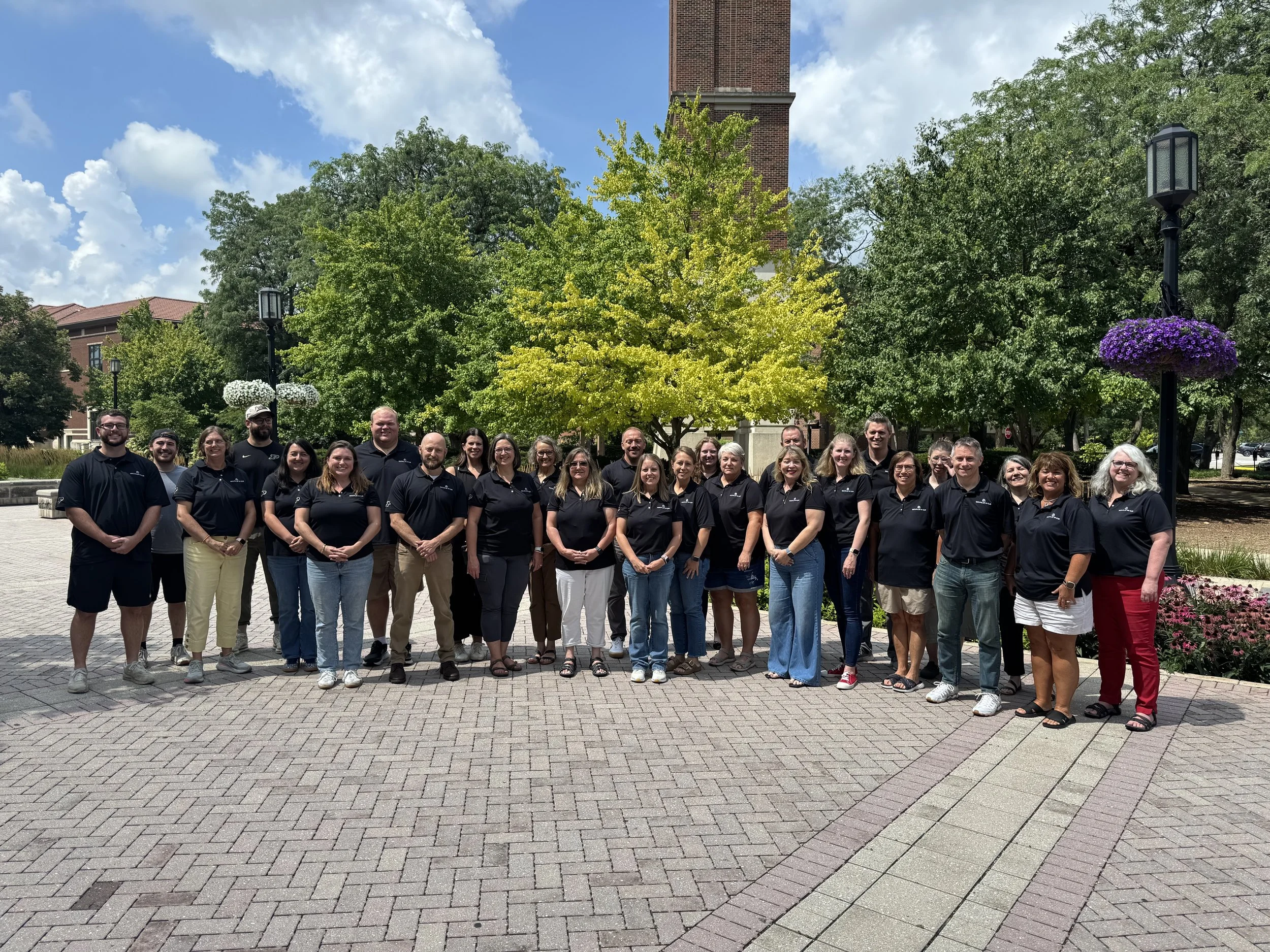
Purdue University’s Noyce Microelectronics Master Teacher Fellowship Program has received a $300,000 supplemental award from the National Science Foundation to expand its work preparing K-12 educators to integrate artificial intelligence education with microelectronics.
The existing NSF-funded fellowship develops a cohort of 18 STEM teachers from high-need schools as leaders in microelectronics education. Fellows participate in summer institutes, ongoing professional development, graduate coursework and district leadership projects focused on creating vertically aligned microelectronics learning and career pathways across K-12 education.
The new funding will strengthen the program’s focus on the growing connection between microelectronics and AI, helping educators explore how intelligent systems depend on semiconductor hardware, data, computing architecture and system design. The expansion will emphasize teacher professional development while also supporting the development of new curriculum and instructional resources.
Beginning in the second year of the fellowship, fellows will participate in a dedicated Microelectronics-AI Summer Integration Institute in partnership with NSF-funded Anvil and SCALE K-12. Through hands-on learning, educators will explore how sensor data, algorithms, hardware design and computational constraints influence AI systems and model behavior.
Fellows will then work alongside SCALE K-12 teachers and Purdue project staff to develop classroom-ready instructional materials that connect AI concepts with the microelectronics systems that make those technologies possible. The interdisciplinary materials will address concepts such as data representation, algorithmic decision-making, model reliability and the relationship between hardware performance and AI outputs.
The supplemental funding will also expand the fellows’ roles as instructional leaders within their schools and districts. Fellows will identify opportunities to incorporate AI concepts into existing K-12 microelectronics pathways and develop professional learning experiences to help other educators understand the connections between microelectronics and AI and integrate those concepts into classroom instruction.
The goal is to build a sustainable network of teacher leaders who can expand access to high-quality AI and microelectronics education, particularly in high-need schools. Curriculum and professional development resources developed through the project will be made openly available through nanoHUB and ChipsHub, extending the work beyond participating schools and allowing educators across the country to adopt and adapt the materials.
“Artificial intelligence and microelectronics are deeply connected, and helping students understand that relationship is increasingly important as we prepare them for the technologies and careers of the future,” said Tamara Moore, co-principal investigator of the Noyce Microelectronics Master Teacher Fellowship Program, director of SCALE K-12 and Purdue’s Crowley Family Professor in Engineering Education. “By investing in teachers as leaders, we can build the knowledge and capacity within schools to create meaningful learning experiences that help students understand how AI works, what makes it possible and the role they can play in the future of these rapidly evolving fields.”
The Noyce Microelectronics Master Teacher Fellowship Program is led by Purdue faculty Greg Strimel, principal investigator, and co-principal investigators S. Selcen Guzey, Tamara Moore and Morgan Hynes. The program operates within the SCALE K-12 network and collaborates with local school districts, Naval Surface Warfare Center Crane Division, the Silicon Crossroads Microelectronics Commons Hub and nanoHUB/ChipsHub.