Engineering Design Process
Overview
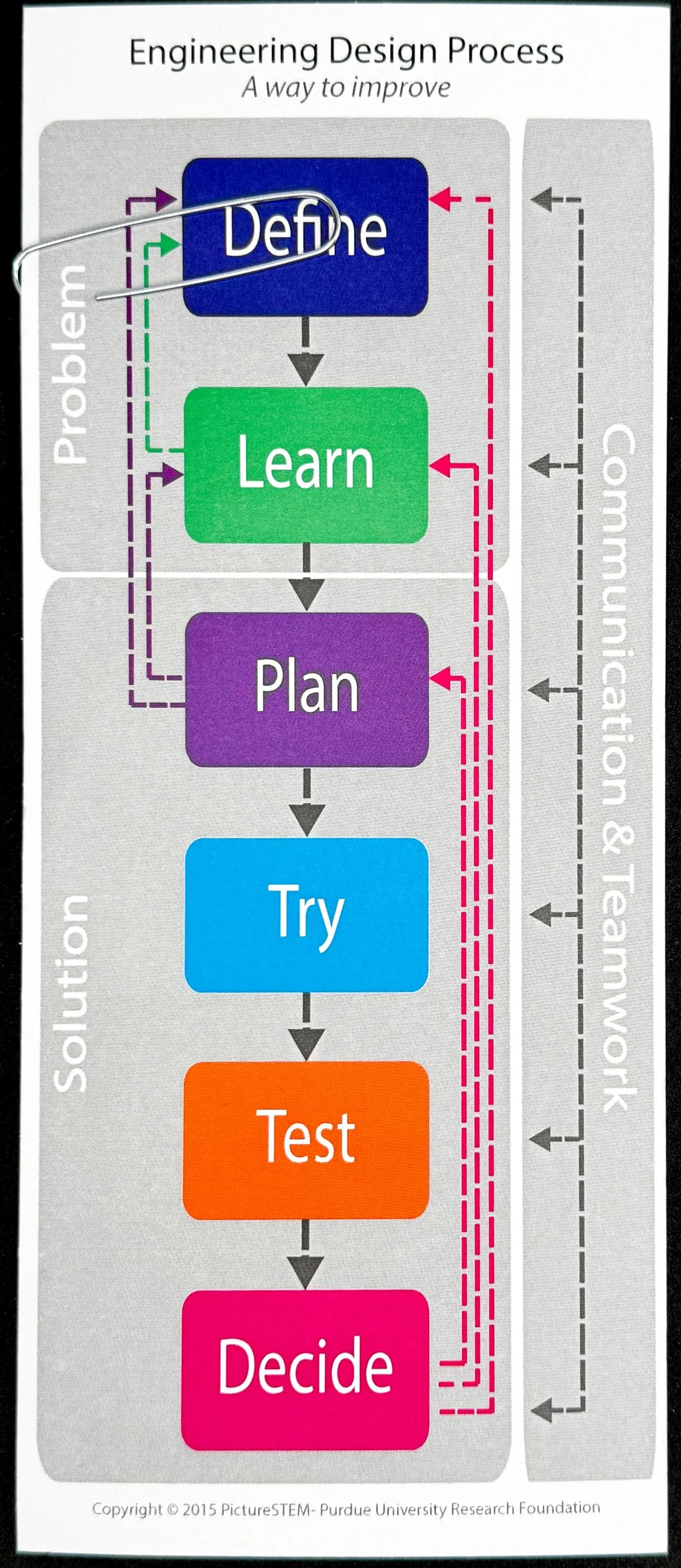
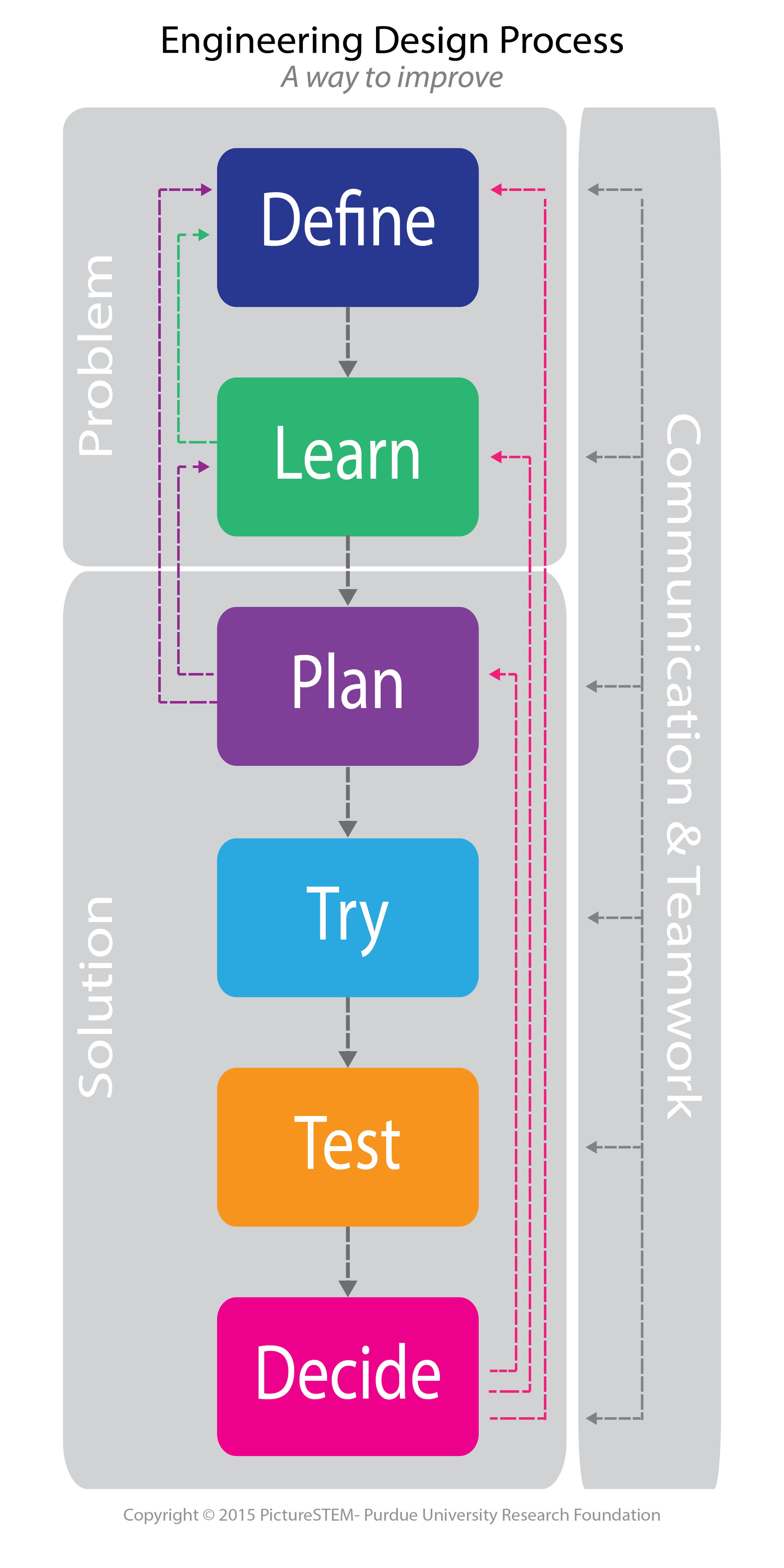
The engineering design process (EDP) is an iterative, systematic process used to guide the development of solutions to engineering problems. There is no single engineering design process, just like there is no one scientific method. However, the various engineering design processes have similar components. The engineering design process (EDP) involves understanding the problem, learning background information necessary to solve the problem, planning, trying, testing the solution, making changes based on the tests, and communicating their ideas. Students will use an engineering design process “slider” throughout the unit as an aid to help them understand where they are in the design process as they work through their project. The SCALE K-12 slider and its terminology has been specifically designed for K-12 use.
Criteria and constraints
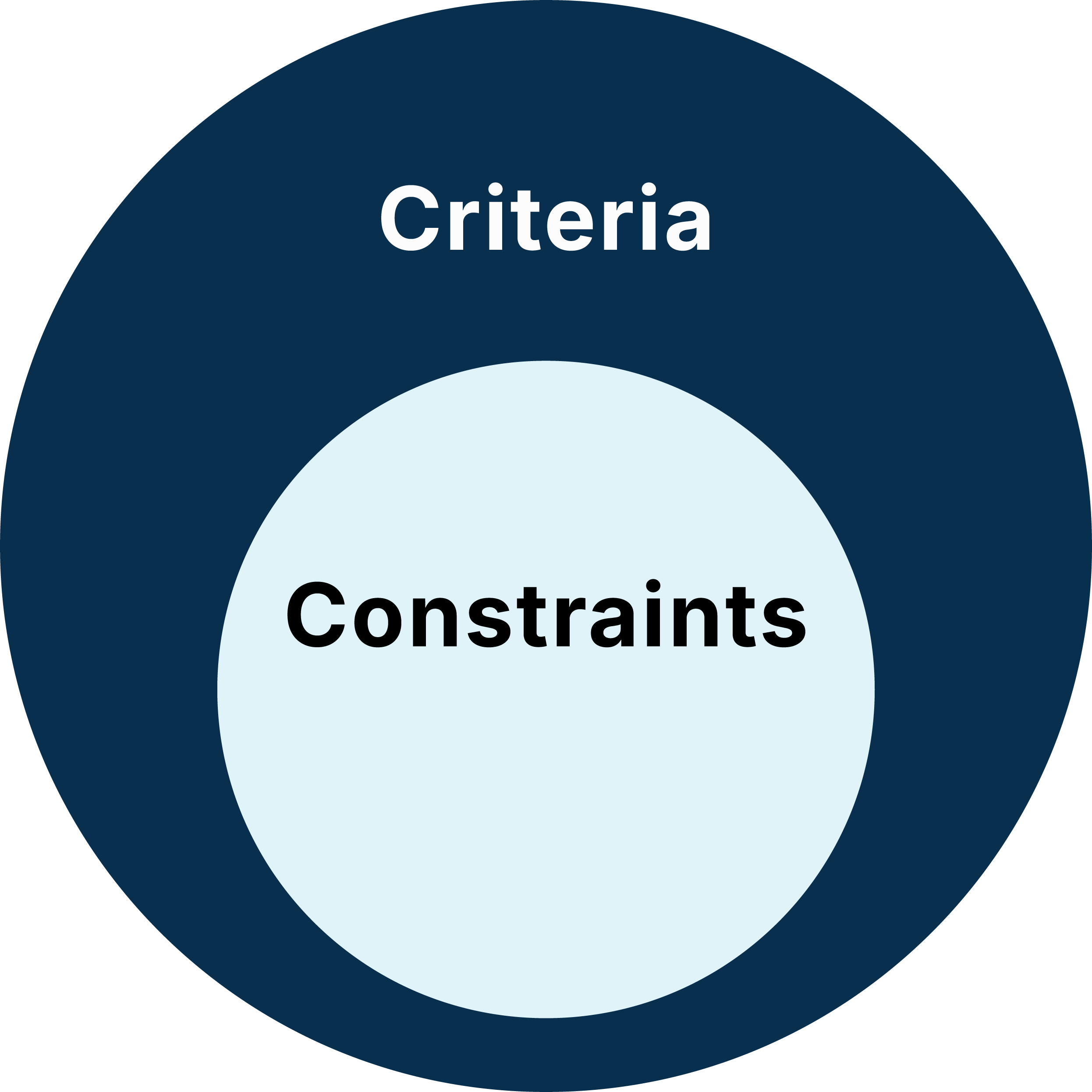
One difficulty that students might experience is distinguishing between criteria and constraints. Criteria are the things required for a successful design, or the goals of the designed solutions. They help engineers decide whether the solution has solved the problem. Another way of thinking about criteria are that they are anything that the client and the engineers will use to judge the quality of a solution. Constraints are a specific type of criteria; they are those criteria that limit design possibilities, or the ways that problem can be solved. If constraints are not met, the design solution is by default not a viable solution to the problem. The relationship between criteria and constraints is represented in the figure. It may be helpful to post the definitions with the figure somewhere in the classroom for future reference.
Some common misconceptions about engineering
Engineers do not have to learn anything new when they are working on a project. In reality: Engineers need to continually learn throughout their lives.
Engineers come up with solutions that are just “good enough” and do not take risks. In reality: Engineers strive to create the best solution possible through optimization. It is normal to experience failure when solving engineering problems.
Engineers work alone to solve a design problem. In reality: Engineers collaborate with people in different disciplines and fields to best solve a problem. Engineering problems often require a wide range of content knowledge.
Some common misconceptions about the EDP
The engineering design process is linear, and you never need to go back to previous phases. In reality: The EDP is a cyclical process that requires many iterations.
Once the project is done, it is considered complete and not revisited. In reality: The engineering design process is never really “done” and it is revisited so engineers can improve projects and make changes.
Problem Framing and Scoping
Define the problem and learn about the problem combine to make Problem Scoping. In this stage, students will be first introduced to the engineering problem through a client letter and then be given a chance to ask questions to the client to receive more information about the problem. The problem statements given in the client memos purposefully do not provide all the information necessary to solve the problem. Students are tasked with generating questions about the problem to try to fill in this missing information. Based on all information from the client, students will then define the problem in terms of: what the problem is and why it is important, who are the client and end users, what are the criteria and constraints, and what other information they may need to learn about in order to solve the problem. This process of generating ideas and questions for the client is an important skill on its own both in engineering and in other fields, but it also helps to ensure that the students fully understand the problem and their task in the engineering design challenge.
Solution Generation
The Solution Generation section of the engineering design process includes plan the solution, try out the plan of the solution, test the solution, and decide whether the solution is good enough. When engineers are generating solutions, they will use iteration as a means to continually improve their solution, reflect back on the problem definition and what they have learned about the problem, and consider criteria, constraints, and trade-offs. Trade-offs involve having to make compromises about which criteria to emphasize because they compete with one another in terms of making the solution effective. For example, cost could be a trade-off for durability.
Definitions
SCALE K-12 units introduce students to the engineering design process using a poster infographic that shows how the process steps flow and are connected together. Units that follow the engineering design process will reference the steps in the process as they are defined here.
COMMUNICATION
Communicate the solution clearly and make sure it is easily understandable
Use evidence to support why the client should use your solution
LEARN about the problem
What kind of background knowledge is needed?
What science/math knowledge will be needed?
What materials will be needed?
What has already been done to solve the problem?
What products fill a similar need?
How should we measure success and improvement?
TEST a solution
Consider testable questions or hypotheses
Develop experiments or rubrics to determine if the solution is meeting the stated criteria, constraints, and needs
Collect and analyze data
TEAMWORK
Discuss in teams how the solution meets the criteria and needs of the client
Consider different viewpoints from each teammate
PLAN a solution
Continue to specify the criteria/ constraints
Generate ideas of possible solutions
Develop multiple solution paths
Consider constraints, criteria, and trade-offs (competing criteria)
Choose a solution to try
Develop plans (blueprints, schematics, cost sheets, storyboards, drawings, etc.)
DECIDE if the solution is good enough
Are users able to use the design to help with the problem?
Does the design meet the criteria and constraints?
How could the design be improved based on test results and feedback from the client/user?
Iterative nature of design: Always consider which step should be next!
DEFINE the problem
Who is the client?
What does the client need?
Why does the client need it?
Who is the end user?
Why might the end user want it?
What are the criteria (requirements) and constraints (limits) of the solution?
Problem Scoping:
WHO needs WHAT because WHY
TRY a solution
Put the plan into action
Consider risks and how to optimize work
Use criteria/constraints and consider trade-offs from the problem/plan to build a prototype (a testable representation of a solution), model, or product
Posters and sliders
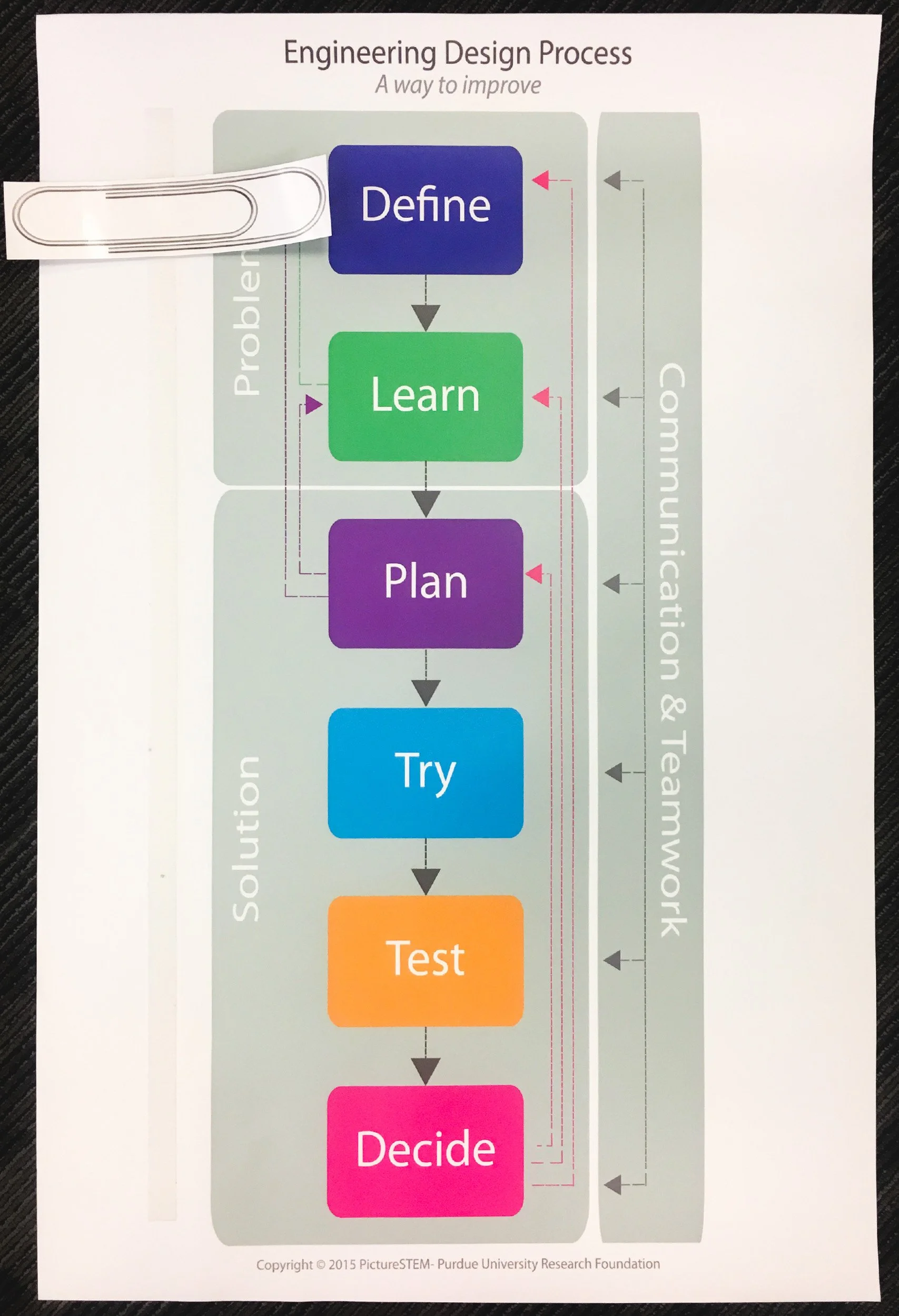
If teaching EDP, we recommend you print a poster for the classroom and an individual slider for each student to reference during the unit.
File downloads and instructions on assembly are on the PictureSTEM website.